Showing posts with label Film. Show all posts

Monday, 15 June 2015

The internet of making lists

After making a list of all the films I've watched on a film-diary-type-website, one thing has become clear: I don't watch many films. Since last November I've only seen 27 films. I always imagined I watched lots of films, but that doesn't seem to be the case anymore. Maybe it never was. The thing about a list like this is that it turns your assumptions into bare facts. When I think I've seen lots of interesting films recently, the list will say 'No, you've only seen five films since February'. The films I imagined I watched were probably two years ago. The truth is that I don't feel the need to watch many films. With so much good television on these days, going to the cinema seems almost unnecessary. When I can watch Game of Thrones, or a new season of True Detective, or Mad Men, or Breaking Bad, I already have a lot of stories. Sorry films, I do love you really, but the list doesn't lie.

The internet is great at keeping track of these things. I use Goodreads to do the same thing with books. And as books take such a long time to finish, they enter the list with a satisfying thud. The slowly growing list, like this blog, will remind me that, look, this is a part of what you did on this day, or that month. My mind reduces the past into a squishy blob where the when of things is uncertain. But the lists remember. For instance, this blog will tell me that about two years ago I was watching a lot of James Bond films. I thought that was last year. The technology disagrees.

Blogging becomes an accidental diary. When I wrote 71 posts in 2011, that was just the present. Now it's four years ago, and my random thoughts on whatever take on more significance. This is what I thought then, or at least what I wrote down. Somehow, reminding myself of the time I watched The Host, a film about a rampaging fish monster, illustrates the passage of time more than anything else. Or it at least reminds me of the time I watched The Host. Unfortunately, I don't blog as much as I used to, because I'm a bad person. And I don't leave reviews on 'Letterboxd'. I need to write down what I thought of some of these films, so me in four years will remember. I'll do that now.

Best film Whiplash Film I really didn't enjoy as much as I wanted to Elysium Most grim The Girl with the Dragon Tattoo Film I saw just before I started this list Interstellar Film that made me wish the director had spent the time doing something better Pacific Rim Someone is taken, but not for as long as before Taken 2 Second most grim The Girl Who Played with Fire Any Christmas film will do, it just has to be about Christmas Deck the Halls Film I'd never heard of but has Heath Ledger Ned Kelly I remember hardly any of this from when I saw it a long time ago Time Bandits Film I actually wrote a blog post about 2001: A Space Odyssey I just finished reading these books The Lord of the Rings: The Fellowship of the Ring There is nothing really to say about this film The Expendables 2 Action film where main character seems strangely laid back Rollerball I wonder if these films will get less popular soon; I mean they're fine, but there really are a lot of them Captain America: The Winter Soldier Now I understand what all the quotes about running meant Forrest Gump Films I saw half of, but couldn't put on the list because rules are rules Home Alone, Skyfall, other things I've forgotten about because I didn't put them on the list
Thursday, 26 February 2015

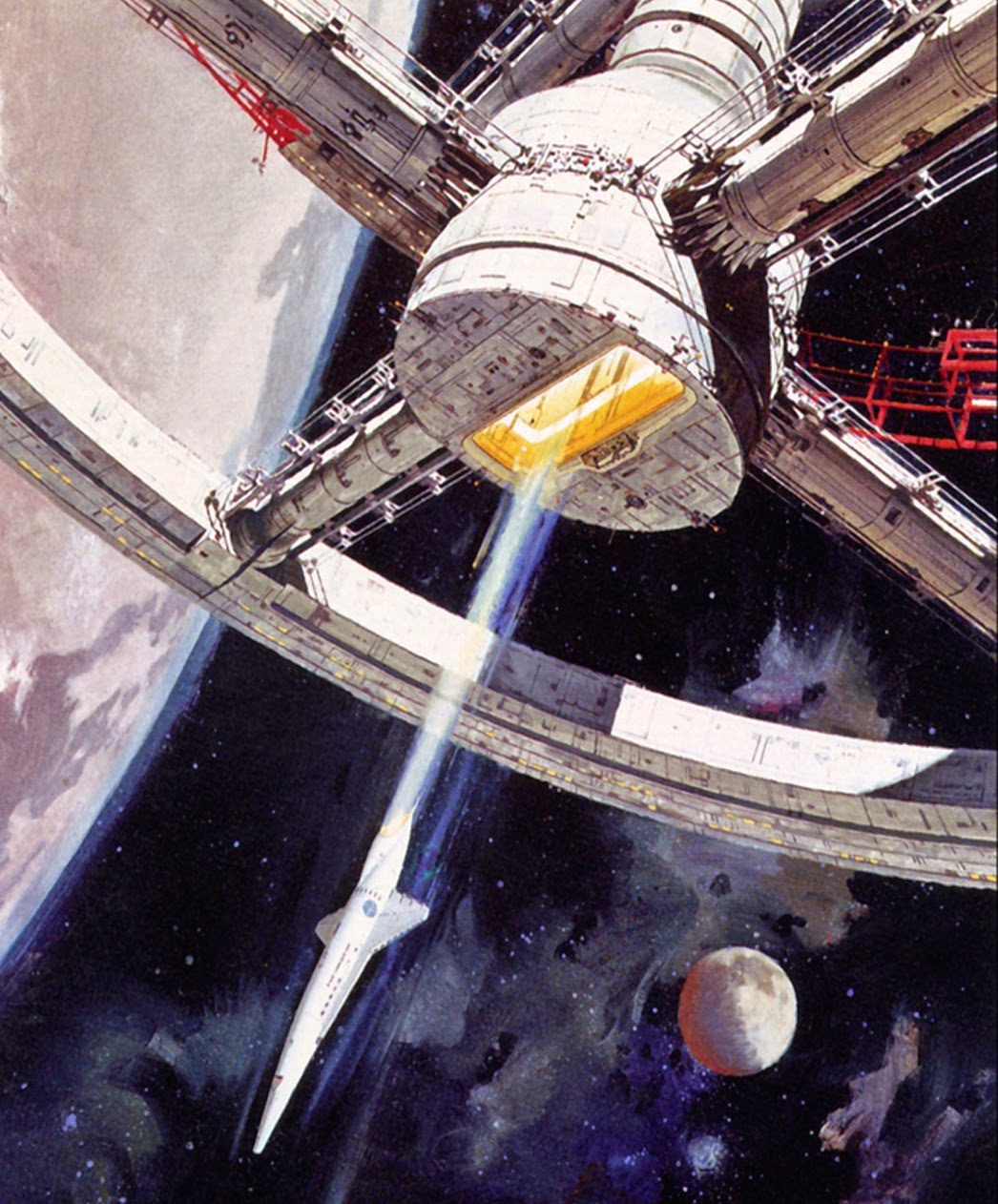
Thoughts from watching 2001: A Space Odyssey

Writing about a film from fifty years ago is almost entirely pointless. There is nothing new I can say about 2001: A Space Odyssey. It might help that I'm not interested in saying anything new about it. I only want to write down some of thoughts I had while watching it, and that's probably what blogs are for. They didn't have blogs in 1968. As far as I know there was only advertising agencies and whisky. So this will have to do. I'm also not particularly interested in most of what there is to say about the film. I don't want to use the word 'masterpiece' and then pretend to be a film historian. I don't really care who Stanley Kubrick is. All I've got is what I saw when I watched the film for the first time. Here it is.

The Dawn of Man. Monkeys. I wonder how many film studies essays have been written about these monkeys. The arrival of a mysterious monolith shakes things up a bit.

Spaceships, classical music. After skipping past pretty much everything, the film has slowed right down. Waltzing space stations, waltzing music. It's all very nice, but some of the interiors still look like a film studies class. I'm still imagining this essay: 'The juxtaposition of the red chairs in the foreground and the stark white walls of the background symbolise...' There's a time in school when you learn the word 'juxtaposition' and then attempt to use it in every essay. It's not something you would ever say out loud. It's an essay word. It's especially good to use in exams. Its real purpose is to say 'Look, I know the word "juxtaposition"'. That's at least five extra marks. You can go up a whole grade with 'juxtaposition'. Anyway, the people have found another monolith, and this one is a lot more interesting. Where did it come from? Who put it there? I think these are questions I'd be asking if this actually happened. After all, a mysterious monolith being buried on the moon isn't a lot more strange than the moon existing at all. It's all a big mystery, this universe. We don't know what it is, but we're here, and this lot are about to discover something new. It's the excellent droning soundtrack that's making me have these thoughts. Vast mysteries need vast music.

Bad robot. There's a while where this film is about a sinister machine, which is pretty much all I knew about it beforehand. It's definitely the most engaging 'film' part of the film. There's a plot, and dialogue, and it's clear what's happening. After the evolution of man, we've got the evolution of machines. No astronauts would actually have begun a voyage with a robot that has such a creepy voice. For such a complex machine, there must be customisation options. My Sat Nav has about a hundred accents and languages to choose from. They might have chosen this voice. Of course, by this point the machine is doing whatever it wants, with all the cold logical certainty of an impassive red light that's decided it's better off without you. 'Don't shut me down, Dave. I'm afraid'. It knows how to code the humans.

Dave travels through the universe. It's time to question the universe again. Dave is going on a long trip through some lights, but these are some impressive lights. It's a rare space film that makes you feel like you're experiencing the vastness of space. That's not exactly possible, but the hypnotic, overwhelming, sensory overload of this part gives it a good go. When you read a book about space, or watch a documentary on physics, you have to stretch your mind out further than it's able to. I heard somewhere that the definition of fantasy is something that could never happen, and science fiction is something that probably will. But the truth is that there is nothing in any fantasy novel that is stranger than the actual universe we're in.

There are billions and billions of stars in the Milky Way - hundreds of billions - and our galaxy is just one of around a hundred and forty billion other galaxies, all with their own billions of stars.* This is all meaningless of course, because my brain can't comprehend how much a billion of anything is. There are vast millions of miles of nothingness in between all these balls of fire and planets and bits of rock and I don't know what else (black holes, I mean, what?). The problem with thinking about all this is that you then have to readjust your mind back down to manageable distances, to the tiny bit of the universe you're in, where there's rugby and houses and films, and you're just generally meant to go about your business. Never mind though, because Dave is going to see what's at the other side of the universe, it's...

The end. What? I'm usually all for defusing grand themes with a joke, but don't take us through all that to show us... a strangely decorated bedroom, with towels. Up until now I thought the film was trying to show us something universal, but this is part of a specific sci-fi plot that I don't understand. All the tension is gone, and poor Dave grows old all of a sudden. Is this what would have happened to HAL if it had gone there by itself? I'd like to see the alternate ending where the robot works it all out, then looms over Earth with its big red light. Or at least just something else. I still feel disappointed by this ending. They showed us the universe then gave us a cardboard bedroom with underfloor lighting. Maybe this is what it'd be like if we did discover exactly what the universe was. All those scientists trying to figure it out are working towards a big anticlimax. Questions are more interesting than answers. What will we do when the big puzzle is solved? The collective response to the solving of the mystery of existence might be 'Okay then, what's next?'

Thanks Dave. Good film, though. Shame about the giant baby.

*A Short History of Nearly Everything, Bill Bryson

Wednesday, 29 October 2014

Is all my stuff obsolete?

In my lifetime, which seems to be getting longer all the time, I have amassed a lot of stuff. In the bottom of my wardrobe there are stacks of old magazines. There's a lot of them. About fifteen years worth of a games magazine that I was subscribed to. There is no good reason for me to still have them. The magazine was eventually closed down, like all magazines will be, because who wants to own a pile of paper when you can get everything on the internet? And that pretty much goes for a lot of my other stuff. There didn't used to be a problem with it. Now somebody could easily call it clutter. Why have all this physical media when it could be transferred to a computer?

Are racks of CDs now plastic irrelevancies when they can be contained invisibly in a silver box? In fact, CDs are easy to get rid of. The discs are only a storage medium for data files. It's the music that counts, and that can be stored on a computer. Transfer them over. Get rid of them. Yes. But what if I don't want an album on iTunes, but would still like to keep it? Okay, I'll keep a few. Not many, though, right? After all, some new computers don't even come with optical drives, because why would you even need one, like some loser stuck in 2005? Technology is marching forward, determined to leave physical media in the past, and if I'm not on board then I'm just not doing it right. The last few years have been a tipping point. Some people have ruthlessly cleared their shelves, and some, like me, haven't really bothered.

I might be changing my mind. For instance, I've been slowly going off the idea of owning films. It might seem like a good idea, but in reality I'll watch a DVD once then put it on a shelf forever and never touch it again. And what's the point in that? I used to watch all the commentaries and little extras. They just seem like a novelty now. So I should get rid of the DVDs. Well, maybe. Mostly. Everyone needs a few favourites to watch sometimes, and I'm not convinced there's a proper digital alternative. A streaming service like Netflix will only ever have some things, and I like the idea of owning a collection. It's possible to download films to iTunes and connect them to a television, but who really does that? And when it comes to books, I still choose to be stubborn, even though I could make the same arguments: paper is just a material for displaying words, words that could be on a screen, and I only ever read these things once. The difference, though, is that unlike data on a disc, books are real objects. They are nice to own. They are nice to have. The only time I see the point in e-books is when I'm trying to clear out old books, which isn't that often anyway. Maybe I would read more without wondering where I was going to fit each new book onto a shelf. Maybe I wouldn't.

There's a brutal and kind of appealing way to approach all this. I've read articles that say we should throw everything we're not using away and live in rooms of pared down minimalistic beauty. Just clear everything out, the articles say, get rid of anything that is clogging up your air space and keep the essential things. I imagine, though, that this is more fun to think about than it is to actually do. Tidy is good. I like tidy. Actually, that's not true. I like tidying. That's the satisfying part. A tidy room is boring. There's nothing to tidy. Even writing about tidying is fun. Not going to watch that film again? Throw it out the window. Why do I have these old books? Get rid of them. Make space. Start fresh. Sounds good. Sweeping away all these physical objects might be fun, like I was lessening some imagined burden, but I suspect there isn't much difference between an almost empty room and the lair of a psychopath. Because what would I have if I threw everything out, dumped all my films, pushed all my books onto some little device? A lot of empty shelves is what I would have.

Using books as decoration seems like a hollow argument, but the media we surround ourselves with is part of our identity. Lining a shelf with certain books is saying 'this is what I like, these are my favourites'. There are some objects that relate to my history. Like my vast collection of Nintendo games that I could never part with, even though they take up all that space. And the stacks of magazines that I believe have some connection to the time I read them. I will never really look at them again, I know that, but I do need to keep some stuff from the past. This is where I disagree with the constantly evolving idea of newness, with all the yearly updates of slim computers to more efficiently hide and organise our things. Yes, CDs and DVDs are on their way out, but we need to keep some real objects from the past, not virtual versions of them. Tidy is good, in moderation. Prune the DVD collection. Donate old books. Clear CD racks. The rest can stay. Some of my stuff is obsolete, but I'll keep it anyway.

Tuesday, 31 December 2013

All the Bond films, from best to worst

A while ago I watched the first ten Bond films and put them into a list. Now I've watched all the others, and put them into the same list. It's a long list. The best ones are at the top, the worst ones are at the bottom, and some things happen in the middle. It looks about right to me. I gave this a lot of thought. For some of them, almost five minutes. Here it is.

1. Casino Royale
2. Skyfall
3. Goldeneye
4. Goldfinger
5. You Only Live Twice
6. Moonraker
7
. Live and Let Die
8. Dr No
9. Tomorrow Never Dies
10. On Her Majesty's Secret Service
11. From Russia With Love
12. The Man with the Golden Gun
13. The Spy Who Loved Me
14. Quantum of Solace
15. Die Another Day
16. The World is Not Enough
17. The Living Daylights
18. A View to a Kill
19. Octopussy
20. Licence to Kill
21. Diamonds are Forever
22. Thunderball
23. For Your Eyes Only

Skyfall is very good. I think it's the best looking, best directed Bond film, and a solid, significant story. It seems like a change of pace. It's almost atmospheric, particularly in its build-up to one of the creepiest Bond villains. It deserves to be right at the top, but really, I just prefer Casino Royale. These films come down to a blend of serious and silly, and Casino Royale gets that exactly right. Its story might be less clean and a bit sprawling, but where Skyfall is grim, Casino Royale is escapism. It's got high-stakes poker in a fancy casino and sinking buildings in Venice. For pretty much all of Skyfall Bond is in a mood, but here he's funnier and more confident and sure of his own invincibility. It does all that while still seeming weighty and important, with real characters and plot. That seems like a strange thing to say, but when it comes to things like character and plot, most of these films don't bother. There isn't always a story. Sometimes it's just bits of talking about missiles and satellites to string the action together. Casino Royale and Skyfall are about the people, and that's why they work so well.

They're not the best because they're new. Quantum of Solace is proof of that. It's a flimsy series of action sequences held together by nothing at all. It seems like a better film than it is because of Daniel Craig, but even he can't save it. There's nothing there. Nothing memorable. There are others, that even when they're not bothering to be serious, work because you can remember than, and they're just good fun. I was worried that Goldeneye might be all nostalgia, but it really is one of the best. After that the Brosnan films go downhill, with the quite-good-really Tomorrow Never Dies, and the really-very-boring World is Not Enough. Die Another Day is only worth talking about as context for how off the rails things went. The invisible car and ice palace are fine, but the bit where he surfs down a crumbling cliff then rides the wave to safety is so out of place it could have ruined the entire franchise.

I'd like to write about the Dalton films, but I can't really remember them, which probably says more than enough. At least they were better than the last few Roger Moores. For Your Eyes Only is at the bottom of the list for being more boring than all the other boring ones, even A View to a Kill, which is the one with the airship. Trying to reboot it with a serious tone didn't work as well with Dalton as it did with Daniel Craig. It seems like the series goes through cycles. It doesn't always know what it wants to be. When everyone gets tired of the jokes they put on serious faces, and when that gets old they try to have more fun again. It's when the two meet that things go best. And anyway, this list is just how I saw it, and it's not always easy to judge. I know that I enjoyed Moonraker more than I thought I would, but On Her Majesty's Secret Service is still just hanging around, maybe a few places too high. I might have been too mean on Thunderball - it was only at the bottom of four films before all the others piled on top of it. And who really knows or cares whether Octopussy is better than Licence to Kill?

When it comes down to it, their age is irrelevant. It would be easy to say that the old Connery ones are the best, but they're not. If you ignore what you're meant to think about the style of the classics and the unfair advantage of modern special effects, Casino Royale is a better film than Goldfinger. It's harder to judge the present, but a good film can be made at any time, and the best work on this series has been done this century. That being said, they are hardly ever consistently good, so the next one might be rubbish.

Thursday, 28 November 2013

Modern cinema doesn't work with my eyes

A few years ago I went to see Toy Story 3 in 3D, and wrote that I was pretty sure I couldn't see the 3D effect. Now I've seen Gravity in 3D, and I'm definitely sure I can't see the 3D effect. Maybe the fact that it was three years between these films shows that I might not be that interested in 3D. But I saw many other films in that time. Nice, enjoyable 2D films that displayed easily visible images. The problem is, as I have already said twice, I can't see the 3D effect. I don't really know what it is, but it sounds impressive when other people describe it. Things fly out of the screen and hover right in front of you, like you can touch them. But around 10% of people can't see this, and it disagrees with some people so much that it makes their head hurt. It's not so dramatic for me. When I put the 3D glasses on they only have the underwhelming effect of turning a blurry mess into a normal looking film, which is useful, but I didn't need an extra pair of glasses for that before. It looks like the film is on the screen, but a bit darker. There definitely isn't anything getting closer to me. There is nothing hovering, and I don't feel like I can touch it.

I have pretty normal eyes. They are short-sighted, or long-sighted (I can't remember), so I wear glasses. I can see real things that are in front of me, and can see when things are getting closer, because they are really there. But there is some technology in these 3D films that doesn't work with my eyes. This isn't really a problem, except that it has ruined a good film for me. I'm sure Gravity is good, because I was able to see most of it. The effects were very impressive, even when I'm wearing what are now just effectively rubbish sunglasses. But I didn't enjoy it. The main point of Gravity is the visual spectacle, and I couldn't see the visual spectacle, at least not the good bits everyone else was seeing. At no point was I immersed in the film, because I was always wondering what I was missing. I wanted to know what everyone else could see. This has never happened before. I've seen lots of films. I think I'm quite good at watching films. This was the first time I felt inadequate.

It's like being on a rollercoaster, but my car takes a slightly different track that doesn't have any loops or drops, and just ambles along. I can see everyone else speeding around me, but I have to just fold my arms and feel annoyed. That's what Gravity made me feel - annoyed. It's not intense, or gripping, or a brilliant showcase for the wonder and awe of cinema - just annoying. I don't think they were going for that. And so the obvious solution is to not watch 3D films. I can do that, because they're not very important and very easy to avoid for years, but I just wonder what I'm missing. I want to know what these floating things look like. I want to know if it would really seem like something was hurtling out of the screen towards me. And I want to know what it's like to watch Gravity.

Wednesday, 20 March 2013

Ten James Bond films

I've been watching the James Bond films in order from the start. There's a lot of them, and they're all mostly the same, but all mostly good. I realised I haven't seen a lot of them before, so it's a bit like connecting the dots between the famous parts. There's the bit where he runs over crocodiles. And the bit where the car flips over a bridge. And a woman gets covered in paint. And all this other stuff happens in between. So much stuff that I need to organise it. I need to make a list of some sort. A list that ranks the quality of the ten films I have seen so far, and is almost completely infallible.

1. Goldfinger
2. You Only Live Twice
3. Live and Let Die
4. Dr No
5. On Her Majesty's Secret Service
6. From Russia With Love
7. The Man with the Golden Gun
8. The Spy Who Loved Me
9. Diamonds are Forever
10. Thunderball

I have no idea about On Her Majesty's Secret Service. It was, really, a bit boring. He spent a lot of time in a rubbish disguise in Blofeld's allergy centre and, well, I can't remember the rest of it. But it's the one that sticks out, because he gets married, and then he isn't married anymore, and George Lazenby is there. He's a different Bond. One that can't act very well, but seems vulnerable and more serious. This is a film that's better when you're not watching it. It's interesting, rather than brilliant. So it sits in the middle of the list, out of place and a bit awkward.

They are always rubbish when they end at sea. Things blowing up on the ocean are always boring in Bond films. The Spy Who Loved Me was going fine until the water-fortress bit at the end. Thunderball is too long, and most of it is incomprehensible swimming. Diamonds are Forever just isn't very good. These three films are at the bottom of the list. It seems that everyone likes The Spy Who Loved Me apart from me, but I did like half of it - the first half, when he was in Egypt. Then hundreds of people were running around a submarine, and I didn't care anymore.

There's a lot more to come. After watching the first ten, it seems like James Bond films don't really know what they want to be. Sometimes they're really silly, sometimes they're serious. They take weird detours into whatever is popular at the time (he goes into space in the next one; he's an astronaut). But they are always recognisably the same thing. He goes to other countries and kills people, and the women like him even when he's old. Some people say that the modern films aren't comparable to these, that the new ones are better in a different way. I think it's unfair to the quality of (some of) the new films. Casino Royale could have been made in 1970, if they'd wanted to, and it would have been just as good. There's nothing wrong with being silly, if it's done well. Compare You Only Live Twice to Die Another Day. They're both nonsense, but one is good and the other has computer effects. I'm trying to judge these films outside of the time they were made. That being said, there's still a lot of Roger Moore to get through.*

* I actually think he's quite good, but I'm feeling pessimistic about the rest of his films. There's a lot of them, and one is called Octopussy.

Saturday, 5 January 2013

I watched The Cabin in the Woods

Considering the years of pain some people went through waiting for The Cabin in the Woods to be released, it felt a bit strange to just sit down and watch it. There was a time when it looked like this film was going to drown in a financial hole, making it a lost Whedon classic that nobody was actually going to be able to see. And after all that, I still didn't know what it was about, because every review was desperate not to tell me. As it turns out, it's a horror film. Or a version of a horror film. Part parody, part incredibly inventive horror-comedy-fantasy-sci-fi-action-adventure-thing. It enjoys playing with your expectations. Five killable friends go to a house in the forest that's a long way from the emergency services, but close to evil monsters. And when all the nasty things are happening in the woods, it cuts to a control room where Bradley Whitford and Richard Jenkins are controlling the horror. It diffuses the tension and adds a comic layer to what is already a lot of self-referential cleverness.

I could write about how postmodern this all is, and use more words like 'diffuses', but that would be ignoring the fact that this film is just a lot of fun. Despite all the gore, it's friendly in that familiar Whedonish (or Whedonesque) way. It doesn't really want to scare you. It wants to invite you into its club of nerdiness, where everything is an in-joke. And it works as a film. It's an hour and a half, cut down to the essential bits without a moment that drags. And it's got Bradley Whitford in it. If, like me, you've spent half of your life watching The West Wing, you'll just expect him to start shouting about voter turnout. But he doesn't. He looks like he's going to, but then he talks about zombies instead.

Friday, 25 May 2012

Three things about The Grey

I haven't done this in a while. I don't know how to 'review' films in a coherent way any more, if I ever did. But here's something you should watch. The Grey. The wolf-punching film. Here's three things about it.

Big wolves are scary. These things chase Neeson and his friends through the snow. They're massive. And loud. And have scary eyes. They are always just around the corner, ready to jump into the camera and rip somebody's throat out. This is the best disaster film I've ever seen. The sort where you start with a group of people, and you have to decide which one's going to last the longest. There's a variety of ways to die out in the Alaskan woods. Including...

Staring into the void. Not a void. The void. The big one. This film is full of the void. They're walking around in it. One gets so full of the void he gives up entirely and sits on a log for the wolves to eat him. At one point Neeson shouts at the sky, but God doesn't come, so he decides to go on by himself. There is no God. There is only the void. It's not a comedy.

Liam Neeson says cool things. These days it doesn't get any harder than Liam Neeson. He can say anything about anything, and it's cool. Of the wolves, he says 'they don't give a shit about berries and shrubs'. They certainly don't. And imagine this, but in a deep menacing Irish accent: 'We're going to get a large branch and sharpen the end of it, and we're going to shove it up this thing's ass, then we're going to eat it.'

Tuesday, 11 October 2011

The first and second rules of the internet

Rule one: do not argue with people on message boards

Rule two: do not argue with people on message boards

It's a well known fact that the internet is used by people that are wrong. And through this vast network of information, they can broadcast how wrong they are to the world. Occasionally you'll come across one of these people, and will be tempted to put them right. Except, as you probably know, trying to do this will only lead to a futile and endless struggle that will consume and waste hours of your precious life. I have learnt this. I don't do it anymore. I stay well clear. In fact, I don't usually go on message boards at all. I stay on here with bloggerers, like you, who are nicer. Recently though, I was looking at the IMDB page for The Adjustment Bureau, a film I quite like. I briefly glanced at the message boards. And it was full of bad things.

Now, everyone's entitled to their own opinion. But this rule does not extend to people who are just wrong. If it's someone who wasn't paying attention. Someone who refuses to accept creative ideas. Someone who would find plot holes in their own birth if they weren't assured it had happened. Here was a list of criticisms so blindingly incompetent that I almost, almost, pressed the reply button. These people are here to test me. This person was particularly testing. I won't quote any of it. No. My point is, if I ever have a point, is that I chose to have a therapeutic rant on here instead of trying to argue. It has helped.

Sunday, 25 September 2011

A film made just for me. Possibly.

The Adjustment Bureau is exactly my sort of thing. I know they didn't make it just for me, but they might as well have. A politician is told he can't see a woman again, because it doesn't follow his 'path'. It would mess everything up. So he has to fight the future to see her again. It's a love story being attacked by the agents of fate, who are all very smart and wear hats. He rides the same bus for years hoping to see her again. The men in hats watch and adjust the world in front of him to keep them apart. Every time he meets her she's pulled away by the hat men, in what looks like an unfortunate series of events. These really are mean hat men. But the path they make for us is for our own good. It can't be changed. Which makes all this running about part of a bigger fight. It seems impossible to outrun his own future and choose something else.

There are films that are objectively good - films that everybody likes because they speak to everyone at the same time. And there are subjective films - the ones that will only be perfect for certain people. I'm not saying The Adjustment Bureau isn't a good film, it'll just have extra goodness if you're me. It features ideas that I love and puts them all into a pacey, smart, and oddly moving thriller. It doesn't get bogged down in the heavy questions it raises. It gets on with it. All the surreal back-room gods and breaking reality you could ever want, with an engaging love story. It's like they looked into my mind and made the film I wanted to see. Maybe I just need to read more Phillip K Dick, or maybe this is as good as I think it is.

Friday, 9 September 2011

Giving up on a film

Have you ever given up on a film? I'll usually watch anything to the end, but with Confessions I couldn't be bothered. And it wasn't even a bad film. A Japanese teacher gets revenge on her insane students, very slowly and usually in slow motion. It winds along with all its different threads coming and going, and doing it all so stylishly that I lost interest. About half way through I thought about turning it off. That's a dangerous thought. What if I miss something brilliant? Maybe I should just skip through it. So I press fast forward. Nothing to watch in that scene. Or that one. I skip the whole chapter. And the next one. And the next one. Then I'm watching a bit of the end. And the film is gone. It was that easy to throw it away, and I didn't really regret it. Sitting down to watch a DVD or some Blu-rays, it's like you're making a commitment. It just wouldn't be right to stop watching it halfway through. It would be messy. It's probably the same impulse that makes me finish books I don't really like. Everything has to be completed and put back in its place. So how boring or bad does something have to be to turn it off?

I've watched some really bad films to the end, getting more annoyed and angry. I still don't think Confessions is a bad film. I just thought I'd rather be somewhere else. Like in bed, where there isn't so much difficult art. I feel a bit sorry for it. They put in all that effort. Never mind.

Friday, 2 September 2011

Things to do now that Harry Potter has finished

Harry Potter's over then. Done. Finished. Not coming back. Not even a little bit. Some people seem quite upset about this, so I've compiled a list of other things to do.

1. Read some more books
J.K. Rowling wrote some very good books. There's other ones too. Books by other writers. They're not really as good as Harry Potter, and you probably won't enjoy them as much, but they're still available. Some of them are actually quite boring. So, yeah, keep reading.

2. Watch some more films
The Potter films are pretty much indistinguishable from each other until everything blows up at the end. The last one's got a good bit where Neville cuts off a snake's head with a sword. There's still other films to watch. I like The Social Network. Have you seen that yet? It's really good. It's out on Blu-rays, and you can even buy the Oscar-winning soundtrack.

3. Eat some delicious biscuits
I like custard creams. You could eat a dozen of those. Hob-Nobs are good, especially the chocolate sort, but you've got to make sure the crumbs don't go everywhere. Shortbread is okay, and sometimes comes in plate-sized chunks. Jammy Dodgers are a bit niche these days, and are probably expensive. Party Rings are disappointing if you're not actually at a party.

4. Join some sort of website
'Registration for Pottermore starts soon,' says the website called Pottermore. 'Explore the stories like never before' and 'discover new writing from the author'. This is just a guess, but I think this will be rubbish. There's no way there's going to be any new Potter writing without a large cheque from a publisher. It'll probably just turn your mouse cursor into a wand.

5. Try to make one eye look down and one eye look up
If you do this your eyes will break and roll backwards, and then you'll only be able to look at your brain. So this probably isn't the best thing to do. I don't really know why it's, um, on the list.

Or you could just read the books again.

Sunday, 28 August 2011

Saves everyone, kisses the girl, goes somewhere else

These days it's a rare film that makes me want to write one of these blog posts. It's got to have ideas that interest me - something that makes me want to fill a paragraph. Source Code is one of these good films. You might already know the premise. A man has to re-live the last eight minutes of someone else's life over and over, each time getting closer to a bomber on a train. And in a way, that's the boring bit. Question asked. Mystery solved. As he goes over it he gets to know the sequence of events and works out who the bad guy is. The interesting part is, that in this big budget thriller, there's all these big ideas. Is it possible to create a parallel world where everything's different? He knows these eight minutes are just a projection, but if he saves everyone, gets off the train, kisses the girl, goes somewhere else - he might be able to carry on. With this question the film can go anywhere. It can pull the plug or go with it. Even before it gets there it's engrossing. The structure of this repeated scene doesn't get old. Each time he tries to break it, push the boundaries and do something else. 'What would you do if you knew you only had a few seconds left to live?' This is a film that can get away with that question.

It's not as mind-squeezing as Inception or an episode of Moffat Doctor Who. Still good though. Sometimes less mind-squeeze is a good thing. Duncan Jones is turning out to be a director worth watching. This and Moon show that science-fiction is about the big ideas. The same big ideas that don't age, that are universal, and create a different place. More films like this should be made. It would keep me watching them.

Thursday, 25 August 2011

Stuff and stuff

There's Stuff and there's stuff. The things you've accumulated throughout your life deserve a capital letter. Boring and plain objects that you don't care about is just stuff. Because if you think about it, every object in your collection of Stuff has memories attached to it. Usually not very exciting memories, but you might remember unwrapping a film, or reading a book for the first time, or listening to music in a certain place. Some things might have come in on your birthday or Christmas, and the rest you bought or found. All of it together is arranged in order somewhere, in rows and piles and boxes.

So, I decided to count all my Stuff:

94 books
28 films/tv seasons
88 CDs
128 games

The most noticeable thing there is how many films I don't have. I usually rent them, and I only really feel compelled to own a few of them. And still, that list isn't right. A lot of Stuff has been given away, or sold, or lost. Stuff that isn't relevant anymore. I seem to keep books, even though they take up a lot of space. And games. You can't get rid of games.The other noticeable thing is that I have many objects. 338 things.

Does your collection of Stuff fill rooms? Or do you burn everything every few years?

Tuesday, 16 August 2011

Do scary films make us a bit mad?

Last night I watched Paranormal Activity 2. It was pretty much the same as the first one, but with a dog and a baby. Doors slam. Frying pans move. Demons stomp up the stairs to drag you out of bed. But it made me think about the way in which horror films effect us. How they alter our minds. The least scary way to watch a horror film is by yourself. It's hard not to join in with other people's nerves, like how you'd laugh more at a comedy while sitting in an audience. So the tagline for Paranormal Activity is 'Don't watch this alone'. Because it might make you paranoid.

If the film has done its job your head will be in a slightly different place afterwards. Even when you've put the film back in its box. Everything is a bit more tense. You start noticing little noises. Creaks and bumps. Your safe house becomes a bit threatening, even though it hasn't changed. Only your perception has. And since Paranormal Activity is all about these little noises, some people might have trouble sleeping (not me, I'm brave). For a short time after watching a scary film, everything's different. What other genre could have this effect on us? Make us actually alter our behaviour. We know it's just a film (and in the case of Paranormal Activity 2, not even a very good one). We know it's not real. Maybe it flicks a switch in our brain, that makes us believe in the monsters we forgot about. Maybe that's the reason we watch these films. To go back for a bit.

Do horror films make you a bit mad? Little bit of crazy? The effect is reversed if you watch a Pixar film straight after. So that's good.

Tuesday, 5 July 2011

The monsters in the woods

I like stories about monsters. I especially like stories about monsters in the woods. The Village has these things. It's almost entirely about these things. The people in this village are afraid of 'those they do not speak of'' in the forest. It's one of those films about the fear of the unknown. I would gladly sit through hours of mystery before anything is revealed. Like I did with Lost. In The Village you only get glimpses of the monsters - big things in red cloaks with long claws. Your imagination fills in the rest. These people have enough childlike innocence to believe the monsters are real. They run away and hide in the basement and do a lot of cowering. It's a film that sets itself up for easy criticism, especially towards the end. 'Well that wouldn't happen,' says eighty percent of its audience. Give your story a big twist and that's all anyone will have an opinion on. I prefer the first two acts, with all their myths and tension. Even though I sort of already knew the twist, I was taken in by it. We become like the characters - afraid of what's in the woods and looking forwards to the scary bits. And we're eventually let down like them.

Nobody's winning any awards here, but it's tense and fun. If you aren't too cynical you might just be taken in by it. Having said that, I'd still like to see the other film. The one that ends differently. There's an interesting world to be seen in something like this. Like the the piles of pebbles in Blair Witch, or even the nasty things that live beyond 'The Wall' in Game of Thrones. It's the unknown that makes people debate and argue and analyse freeze frames, not neat twists. The Village could have been a lot more.

Friday, 17 June 2011

Playing chess with Professor X

Move your rook. 'What?' 'I didn't say anything.' 'Okay. I just... thought you said something.' Move your rook. 'You're doing it again.' 'I'm not.' 'I try to have an honest game of chess with you - ' 'I'm not doing anything.' 'Okay, okay, let's just move on.' ...You should definitely move your rook. 'We can play Kerplunk again. Is that what you want?' 'No.' 'Then stop it.' 'Sorry.' ...How about that rook though? 'That's it, I'm taking your knight.' 'Check.' 'I hate you.' 'Would you like to play Battleships instead?' 'No.'

X-Men: First Class is pretty good. As other comic book films dig deep to bring up characters nobody has ever heard of, the X-Men franchise puts them in their place. The first three films were so long ago that they've had the time to get round to an origin story. And it all still makes sense. Fun, entertaining, and predictable. The best so far. But how much can we take? There's a whole list of possible and upcoming X-Men films. Maybe too many.

Tuesday, 14 June 2011

It's a long way to walk

Walking. Walking. Walking. They're walking. Through Siberia. Through deserts. Up mountains. Down mountains. More cold. More hot. More dying of hunger, then thirst, then hunger again. Not having a good time. It's a long way to India. Poking holes in bark to make a mask for the snow storm. Running and hiding from the sand storm. Drinking mud. Eating snakes. Up mountains. Down mountains. It's a long way to walk when your feet hurt.

They're doing this to escape from a Soviet prison. The Way Back is the sort of film where people walk in the desert until they collapse. Is that a mirage or a refreshing pool of water? Do they go off course to have a look? Either way they're not getting out of this desert for a long time. At times it's a bit like Defiance, other times it's an endurance test. Not much fun, but not bad at all.

Saturday, 11 June 2011

Red or green or orange

It's blue. Very blue. I don't know why it's so blue, but it is. They must have had a meeting about it. They could have made it red, green, maybe a nice shade of orange. Instead they made it blue. It's blue in the caves. It's blue on boats. It's even blue in people's houses. It's all blue. Apart from flashbacks. They're sort of... yellow. Nice flashbacks to happier times when the sun was out and everyone wasn't trying to bite your face off.

The inexplicably successful Underworld franchise just keeps going. Film four is going to be released next year. I mean, proper franchises don't get that many films. There'll probably be a lot of bashing about in caves and unexpectedly complicated backstory. In its defence though, it's blue and has werewolves in it.

Wednesday, 8 June 2011

Charlie sitting by a typewriter

After John Malkovich and Synecdoche, the only decent thing to do was to watch Adaptation. It's writing about writing, about Charlie Kaufman writing the film itself. He lies around the place with a blocked head, trying to find the inspiration to adapt the book he's been commissioned for. If Malkovich is where all the big ideas are, this shows how hard it is to invent them. Is it cheating to write about yourself writing, rather than thinking of a 'proper' new film? Maybe. It's self-indulgent, but he gets away with it. It becomes about different views on screenwriting, and how that effects the film. At first he wants to write a screenplay where nothing much happens, and we watch that. Then he's told to make the ending an 'event', so we get murder and crocodiles and swamps. Everyone's acting out his meta world that he can change and manipulate. His brother Donald is having an easier time, writing a script about multi-personality killers and car chases. Charlie looks down on this. Like in Synecdoche, he's trying to make a film about everything at once, about trying to find some existentially truth. Or, he's making a film about trying to make a film about everything at once. When he succeeds he can write something focused about portals into actors minds, when he's stuck he has a bit of a crisis and grabs for everything at once.

I know how to finish this script now

Being John Malkovich is still the best. Adaptation is about the writer's block that comes from trying to write something as good as it. It's a film for writers. Nicolas Cage does a good job of looking extremely anxious through the whole thing. You probably won't sympathise with this strange and awkward man if you're not a writer. It might be a warm up for the madness that comes later.